Blake Klein · 10 November 2026
Researchers Use Tree Cores from Nookwood to Reconstruct Regional Weather Trends
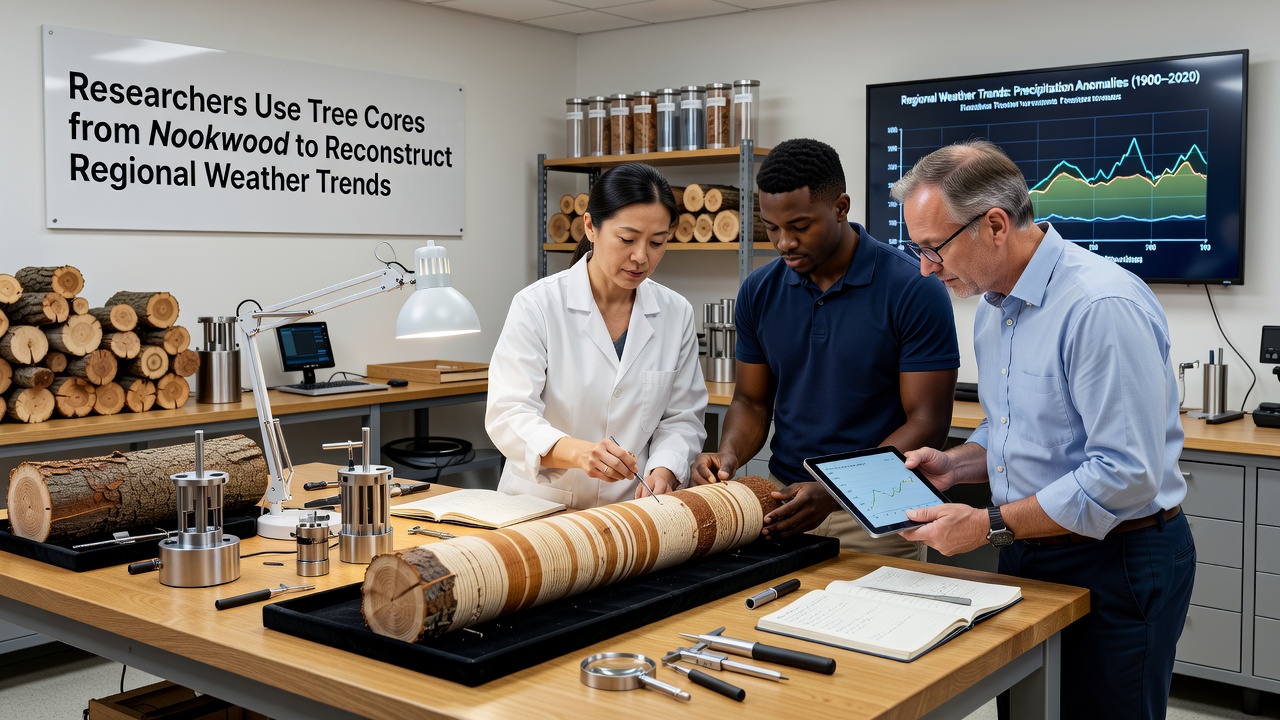
Tree core sampling has emerged as a key method for piecing together past climate patterns, and teams working in Nookwood have applied this technique to map regional weather shifts over several centuries. Researchers collect narrow cylinders of wood from mature trees without harming the overall health of the stand, then examine the annual growth rings under microscopes and through digital imaging systems. Each ring width and density corresponds to temperature, precipitation, and drought conditions during the year it formed, which allows scientists to build chronological records that extend well before modern weather stations existed.
Studies conducted through late 2025 and into November 2026 have focused on species such as oak and pine that dominate sections of Nookwood woods. These trees live long enough to capture multi-decadal cycles, and their rings show clear responses to known historical events like the severe drought periods of the 1930s and the wetter intervals of the mid-20th century. Data collected from more than 200 cores reveal alternating patterns of narrow and wide rings that align with instrumental records from nearby stations, confirming the reliability of the proxy data.
Methods Used in the Nookwood Project
Teams follow established protocols developed at laboratories such as those affiliated with the University of Arizona's Laboratory of Tree-Ring Research, yet they adapt the approach to local soil and elevation conditions. Workers use increment borers to extract samples at breast height, label each core by location and tree species, then sand the surfaces to expose ring boundaries. Cross-dating matches patterns across multiple trees to eliminate false or missing rings, while statistical software converts ring measurements into climate reconstructions for temperature and rainfall.
November 2026 fieldwork added new cores from higher-elevation stands that had not been sampled previously, extending the record back to the late 1600s. Researchers compare these findings against independent datasets from the Australian Bureau of Meteorology to test whether regional signals match broader hemispheric trends. The process requires careful calibration because local factors such as competition for light and soil nutrients can influence growth independently of climate.
Key Findings on Regional Trends
Analysis shows that the driest decades in the Nookwood reconstruction occurred during the 1820s and again in the 1890s, periods when ring widths dropped sharply across multiple species. Wetter conditions appear in the rings from the 1910s through the 1930s, consistent with historical accounts of increased flooding in adjacent river valleys. Temperature reconstructions indicate a gradual warming trend beginning in the mid-1800s that accelerates after 1950, matching patterns observed in other mid-latitude forests.
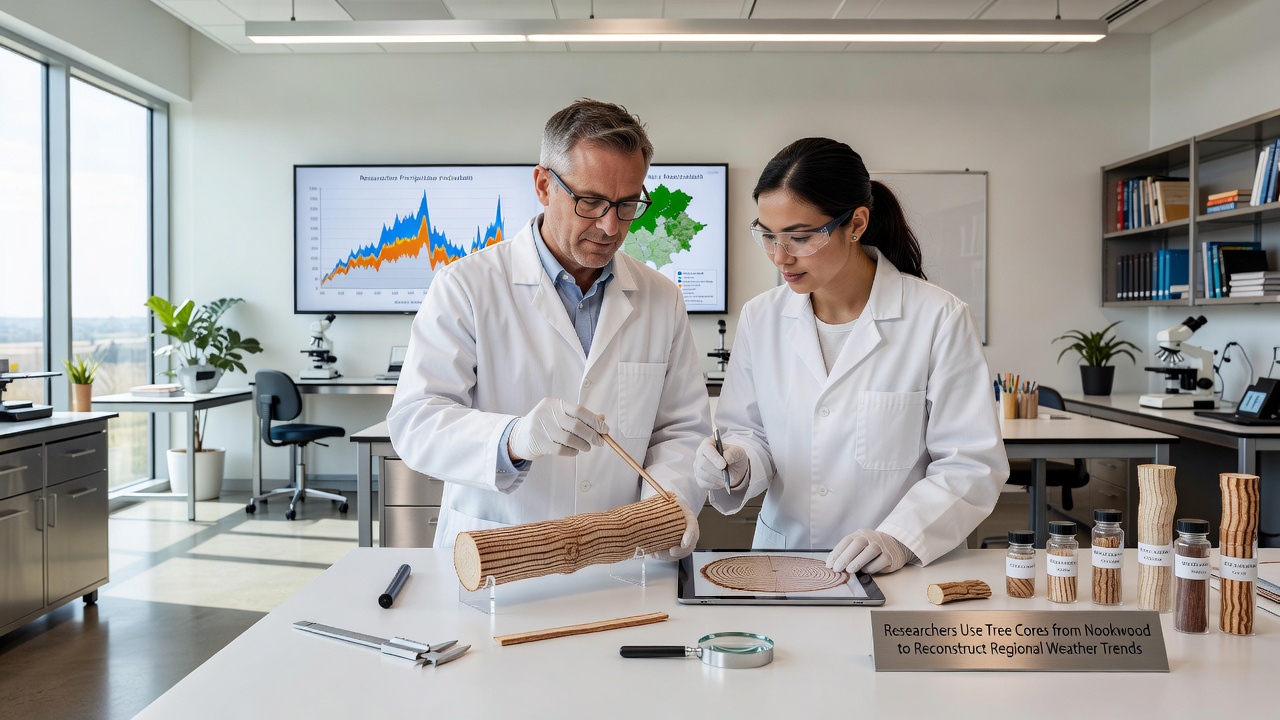
What's interesting is how the Nookwood data fill gaps between sparse early weather observations and modern satellite records. Observers note that the combined dataset improves the resolution of drought indices used by water resource managers, and the same cores also supply information on forest response to past insect outbreaks that coincided with dry years. Researchers cross-reference ring chemistry, particularly stable isotopes of carbon and oxygen, to separate temperature effects from precipitation signals more precisely.
Integration with Broader Climate Records
Data from the project feed into larger networks coordinated by agencies such as NOAA's National Centers for Environmental Information, where tree-ring chronologies from multiple continents are merged into hemispheric temperature reconstructions. Nookwood samples contribute to the North American network because they sit at a transition zone between continental and maritime climate influences. Comparisons with European oak chronologies reveal some shared extreme years, yet local variability remains strong enough to warrant site-specific studies.
November 2026 updates included new statistical models that reduce uncertainty in the earliest part of the record by incorporating additional living trees and remnant wood from old structures in the region. These refinements tighten error margins around reconstructed summer temperatures and allow better detection of decadal oscillations such as the Pacific Decadal Oscillation. The approach also supports validation against independent proxies including lake sediments and historical diaries kept by early settlers.
Applications for Future Planning
Regional planners have begun incorporating the Nookwood reconstructions into assessments of water availability and wildfire risk. Long-term drought frequencies derived from the rings help calibrate hydrological models used by agencies responsible for reservoir operations. Because the record extends several hundred years, it captures rare events that fall outside the short window of instrumental data, improving estimates of return intervals for extreme conditions.
Researchers continue to collect cores from additional stands to test whether trends hold across different aspects and soil types within Nookwood. Early results suggest that south-facing slopes show more pronounced responses to temperature increases, while north-facing areas retain stronger precipitation signals. This spatial detail assists forest managers in selecting species for restoration projects that align with projected climate envelopes.
Conclusion
The ongoing analysis of Nookwood tree cores demonstrates how dendrochronology supplies quantitative evidence of past weather variability that complements shorter instrumental records. Findings released through November 2026 refine understanding of regional temperature and precipitation patterns over three centuries, while the same samples support studies of forest dynamics under changing conditions. Continued sampling and cross-comparison with other proxy sources will further strengthen the reliability of these reconstructions for both scientific and applied purposes.